
Navigating Retail Supply Chain Challenges with the Right 3PL Partner

Katherine Wroth • November 18, 2024

Until the 1920s, shopping primarily occurred at the local neighborhood corner store or small-town square. Then, chain and department stores emerged, offering a broader variety of goods and transforming shopping into an experience. By 1956, the first shopping mall was constructed, and large retailers began to dominate, gradually pushing out smaller mom-and-pop shops.


However, no shift has reshaped the retail world as profoundly as eCommerce. Today’s retail landscape is a digital frontier where anyone with a product and an internet connection can reach a global audience. Yet, this transformation has brought a range of challenges, leaving retailers and suppliers navigating a complex and evolving marketplace.


Rising inflation threatens margins, labor shortages complicate peak demand management and the shift to omni-channel distribution adds complexity. Meanwhile, changing consumer expectations are driving a need for greater speed and adaptability.


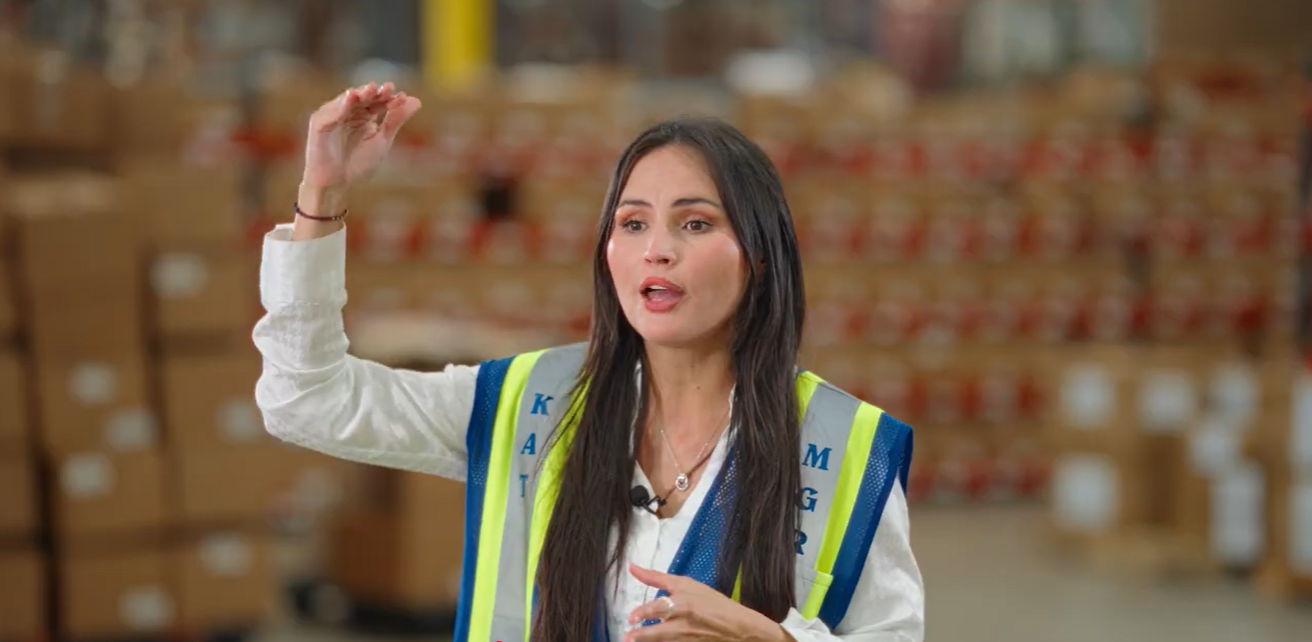
These challenges underline the importance of having an efficient, agile, optimized and sustainable supply chain that can flex during unexpected peaks, overcome disruptions and meet new challenges as they emerge. One way to achieve this is by partnering with an experienced third-party logistics provider (3PL) like Barrett Distribution. Here are five key benefits of outsourcing retail logistics to a reputable 3PL.


1. Access to Skilled and Scalable Labor

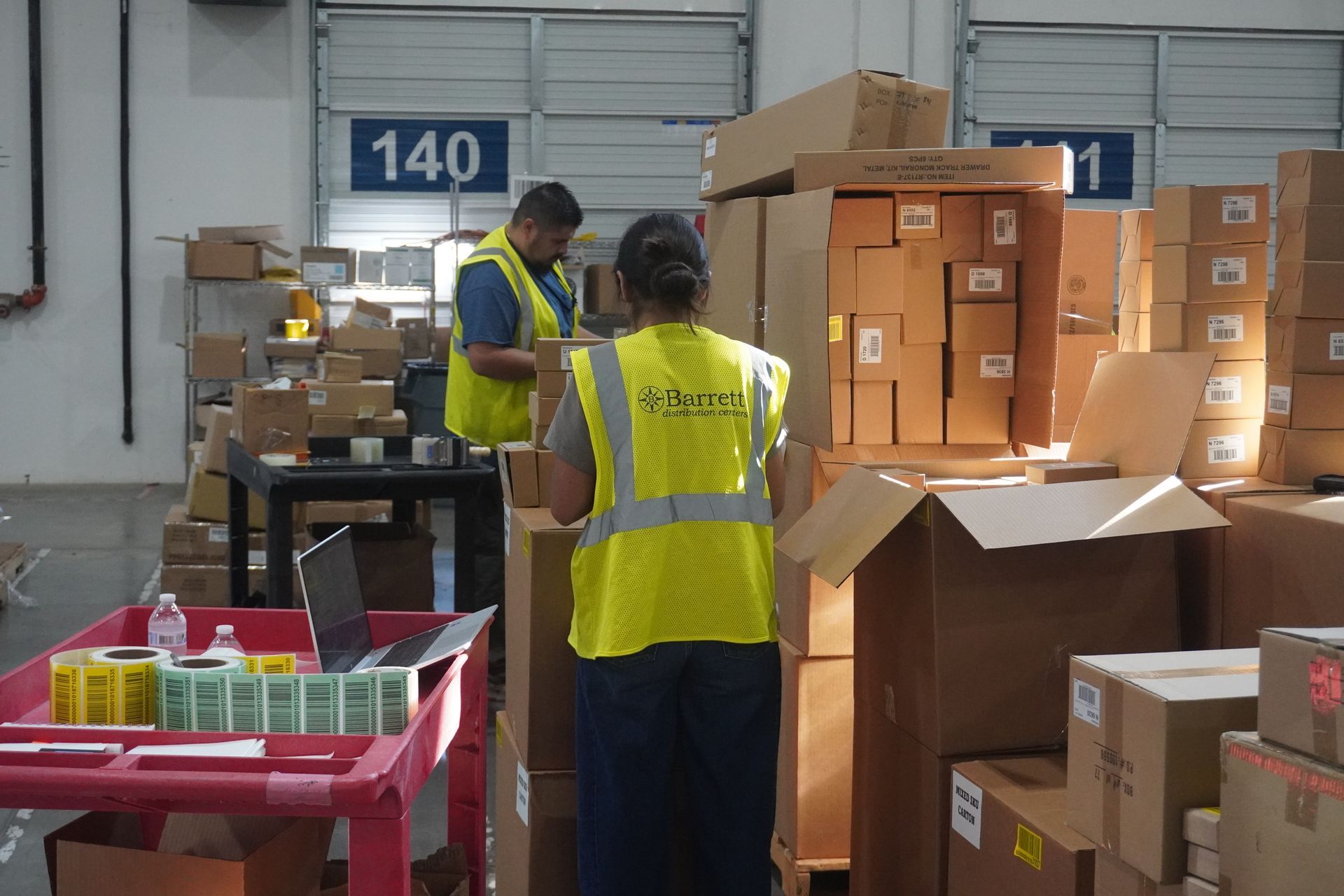
Labor shortages remain a significant hurdle, especially during peak seasons. By tapping into a 3PL's expansive labor pool, retailers can quickly scale their workforce to meet fluctuating needs. Barrett streamlines recruiting and onboarding processes, ensuring the right talent is matched to the right roles. This helps retailers efficiently manage growth and seasonal surges with confidence.


2. Investment in Automation and Innovation

Staying competitive in today’s fast-paced retail environment requires constant innovation. Many companies, however, lack the resources to prioritize supply chain digitalization and automation. Barrett continuously invests in advanced technologies like autonomous mobile robots and predictive picking algorithms, enabling clients to meet market demands with enhanced efficiency. These scalable innovations provide the flexibility needed for future growth.


3. End-to-End Supply Chain Visibility

Comprehensive visibility is no longer a luxury but a necessity, especially in direct-to-consumer retail. While most companies utilize transportation visibility tools, they often fail to cover a product's full journey. Barrett offers end-to-end visibility that spans warehousing, packaging, and transportation. This capability ensures seamless inventory management and optimizes product flow, allowing retailers to respond quickly to customer needs.


4. Sophisticated Data Analytics and Insights

Retailers often underutilize the power of data analytics to make faster, smarter decisions. By partnering with a 3PL that excels in data analytics, businesses gain actionable insights into efficiency, sustainability and customer behavior. Barrett leverages cutting-edge technologies like predictive analytics and artificial intelligence to identify trends, benchmark performance and uncover new opportunities. This data-driven approach ensures retailers stay ahead of shifting market demands.


5. Customized and Efficient Packaging Solutions

A one-size-fits-all packaging strategy no longer works. Barrett integrates materials management and packaging into distribution operations, reducing costs and increasing speed. Their tailored approach ensures packaging aligns with consumer expectations for quality, sustainability and efficiency across all channels.


Focus on Your Business—Leave Logistics to the Experts

Today’s consumers expect memorable and convenient shopping experiences, whether in-store or online. Meeting these expectations requires a well-managed supply chain that can adapt to challenges and capitalize on opportunities. By outsourcing logistics to a trusted 3PL like Barrett, retailers can concentrate on their core strengths while relying on experts to handle the complexities of supply chain management.


Why Barrett? We empower retailers to navigate uncertainty, enhance agility and deliver superior customer experiences, helping businesses thrive in a competitive retail environment.


Are you ready to optimize your retail supply chain? Discover the Barrett way—contact us today for a complimentary supply chain consultation. 

Recent Blog Posts
By Katherine Wroth December 16, 2025
Warehouse automation isn’t new, but determining when it actually makes sense is where most companies struggle. Recorded live at WERC 2025 in New Orleans, this conversation brings together leaders directly involved in real-world warehouse automation decisions. Kevin Lawson interviews Chris Lingenfelter , founder of Robot Advisors, and our very own Tim Barrett , CEO of Barrett Distribution Centers. They sit down for a practical discussion on robotics, drones, and the hype surrounding automation. The focus stays on what actually matters: cost per unit, operational fit, employee experience, and ROI. If you’re evaluating warehouse automation or wondering why past investments haven’t delivered, this breakdown offers practical, experience-backed insights. Why Barrett took a robot-agnostic approach One of the most important takeaways from the WERC session: there is no one-size-fits-all robot. Barrett was an early adopter of autonomous mobile robots (AMRs), including systems from Locus Robotics and Six River Systems. But instead of standardizing on one solution, the company evaluates automation based on: SKU count and product size Order profiles and velocity Facility layout Customer growth expectations A footwear operation with serialized inventory has very different needs than an apparel fulfillment center, and Barrett treats them that way. The result: better outcomes for customers and lower long-term operational risk. Inventory drones: the unexpected game changer While AMRs get the spotlight, Barrett’s biggest automation win came from inventory drones. Using drone-based cycle counting, Barrett increased inventory count frequency by more than 7x while significantly reducing labor costs. For high-accuracy environments, especially serialized footwear inventory, this technology proved essential. The impact went beyond numbers: Higher inventory accuracy Faster exception resolution Better employee roles focused on analysis instead of manual counting In short, automation didn’t eliminate jobs. It made them better. How Barrett really thinks about ROI ROI isn’t ignored, but it isn’t the only metric. Barrett evaluates automation using cost per unit shipped rather than chasing flashy payback models. Capital investments are amortized based on contract life and redeployment potential, then layered with labor and operating costs. The guiding question is simple: Which solution produces the lowest sustainable cost per unit? That approach keeps decision-making grounded and aligned with customer outcomes, not tech hype. “To bot or not” starts with a baseline Chris Lingenfelter, founder of Robot Advisors, reinforced a critical point during the session: You can’t evaluate automation if you don’t understand how your warehouse operates today. Many companies struggle to answer basic questions: What does each unit really cost to ship? Where are labor inefficiencies hiding? Which processes are already working well? Before recommending automation, Robot Advisors helps operators establish a true baseline, then compare technologies objectively. Sometimes, the right answer isn’t robotics at all. That honesty matters. Automation as a competitive advantage for 3PLs For Barrett, automation isn’t just an operational tool. It’s a competitive differentiator. When engaging new prospects, the team often presents: Multiple automation paths Clear tradeoffs between solutions A data-backed rationale for each option That depth of analysis resonates with COOs and CFOs evaluating long-term fulfillment partners. It signals preparedness, transparency, and experience, not guesswork. The workforce question: what changes, what doesn’t As robotics adoption increases, warehouse roles are evolving. At Barrett, automation shifted labor away from repetitive tasks and toward: Exception management System oversight Data analysis Engineering and IT support Over time, this required growing centralized IT and engineering teams, a necessary investment to support advanced operations across multiple facilities. The takeaway from WERC 2025 was clear: automation changes work. It doesn’t eliminate the need for people. Thinking about automation, but not sure where to start? Contact us now for a free supply chain consultation.
By Katherine Wroth December 9, 2025
FOR IMMEDIATE RELEASE Franklin, MA — Barrett Distribution Centers , a leading third-party logistics provider recognized for its expertise in eCommerce and omnichannel fulfillment, is proud to announce a new partnership with Maxwood Furniture to support its Western US DTC fulfillment operations. The partnership marks a significant milestone for Maxwood as the company continues to scale its nationwide distribution strategy. Maxwood Furniture is a global manufacturer of precision-engineered wood furniture with more than 20 years in the market. The company offers several distinct brands and product lines that ship from its US-based distribution centers or directly from its 1.3 million-square-foot factory in Vietnam. Maxwood serves retailers, design and procurement firms, hotel groups and turnkey project companies around the world. “We walked away from our visit to Barrett’s Montebello operations genuinely impressed with the visibility their systems provide,” said Heidi Germann , senior manager of operations at Maxwood. “Their integration, reporting and thoughtful approach to network design really stood out. Barrett’s geographic footprint fits where we’re headed and their team’s thoroughness helped us determine the best transition path.” After the initial transition, Barrett will begin planning a Dallas warehouse location to support Maxwood’s continued growth. “We are excited to partner with the Maxwood Furniture brand and team,” said Mark Healy , vice president of customer solutions at Barrett. “Our companies are aligned culturally and operationally, which creates a powerful combination to support Maxwood’s market-leading growth initiatives.” The launch is scheduled for mid December with outbound DTC order processing beginning shortly after. About Maxwood Furniture: Maxwood Furniture is a family-owned and operated import and wholesale business that designs, manufactures, and distributes solid wood furniture products across North America and around the globe. Our products are meticulously engineered in our fully accredited factory to meet or exceed US & EU safety standards. We manufacture using the latest equipment & best materials, including industrial-grade hardware, to create products that are made to last. Our customers range from designers to small independent & large retailers such as Rooms to Go, Jordan’s Furniture, and Bernie & Phyl’s. About Barrett Distribution Centers Since 1941, Barrett has provided customized third-party logistics (3PL), direct-to-consumer (DTC) eCommerce fulfillment, omnichannel distribution, managed transportation solutions and retail compliance for clients across all industries, with a focus on apparel & footwear, health & beauty, consumer packaged goods (CPG) and education. Barrett continues to be a leading 3rd party logistics provider in North America, known for superior execution, customer engagement and direct access to senior leadership decision makers. As a member of Inc's fastest growing companies list 15+ times, Barrett is big enough to do the job and still small enough to deeply care about your business. Brands interested in a new 3PL partnership may contact Barrett directly here . Official Release Here
By Katherine Wroth November 28, 2025
As a marketer, I can’t help but think about how much “fluff” is in advertising and how people are bombarded daily with thousands of generic messages. And as I begin my holiday shopping, it honestly hurts my soul knowing that dad is getting another set of generic socks, sister is getting another plain ceramic coffee mug, and mom is getting another non-stick pan that will end up with the hundreds she already has. Then I started noticing people line up for HOURS to get their bags monogrammed, their journals engraved, and their gifts wrapped with custom notes — and it hit me. Personalization is all about a feeling. The feeling that you thought deeply about someone when choosing a gift, and that it wasn’t just another HomeGoods candle regift (we’ve all been there — no judgment, but I am squinting). And yes, these are the things that keep me up at night. But on a larger scale, I’m always thinking about what brands could be doing better. And the data is in: personalization is one of the most effective ways to stand out. According to Salesforce, 78% of consumers are more likely to repurchase from brands that personalize their offerings , and Adobe reports that 52% of consumers now expect personalized offers from retail brands . What used to be a “nice touch” is now the expectation. Below are the personalization trends we see leading the charge this holiday season — many of which you’ll spot in our recent personalization workflow video. 1. Monogramming is having a moment Embroidery remains one of the most requested personalization services. It creates an emotional connection that gift shoppers love, and when it’s built directly into fulfillment operations, it avoids the bottlenecks brands often face. 2. UV printing is becoming a go-to for fast customization UV printing delivers a premium look quickly and works across a wide range of materials. It provides brands with the flexibility to offer personalization without compromising shipping promises. 3. Laser engraving continues to stand out for gifting Engraving adds depth, permanence, and a premium feel that elevates even simple products. With 86% of shoppers stating that personalization influences their purchasing decisions , engraving has become a strategic differentiator for gifting moments. 4. Debossing is rising in popularity for premium and corporate gifting The subtle, elevated finish resonates with shoppers seeking something that feels intentional and gives professional vibes. It also photographs beautifully, which matters when unboxing content drives discovery. 5. Handwritten notes still matter There’s nothing more human than a handwritten message. A simple note can turn a routine order into a moment worth sharing, and shoppers notice the effort. 6. Gift wrapping expectations are higher than ever Gift wrapping used to be a “nice-to-have." Shoppers want gifts to arrive ready to give, and they expect the wrap to match the quality of the item. When a 3PL integrates wrapping into its workflow, brands get consistency without sacrificing speed. 7. Kitting and curated sets are on the rise Gift sets and bundles remain one of the strongest trends of the season. Customers love the convenience and the elevated presentation, but behind the scenes, kitting requires organization and accuracy — especially during peak. That’s where strong fulfillment workflows matter. 8. Custom packaging shapes the unboxing experience Personalized tissue, belly bands, stickers, sleeves, and inserts transform a simple shipment into a brand moment. Deloitte found that 54% of consumers expect a personalized unboxing experience , and 70% say that custom packaging enhances their perception of a brand . Packaging is all about storytelling. Why personalization matters more this season Across retail, personalization drives: Higher repeat purchases Increased AOV Stronger first impressions Better loyalty More organic social content With 40% of consumers spending more than planned when they receive personalized experiences , the value is undeniable. The brands that stand out are the ones that can deliver personalization consistently, accurately, and quickly — especially when volume spikes. How Barrett brings personalized fulfillment to life Within Barrett facilities, personalization is an integral part of the operational workflow for many of our partners. Our teams support brands with: Monogramming and embroidery UV printing Laser engraving Debossing Gift wrapping Handwritten notes Custom packaging setups Kitting and bundling Real-time visibility and reporting Brands get the elevated customer experience they want without compromising speed or accuracy. Big plans for custom services next year? If your brand wants to introduce new custom services or scale the ones you already have, an experienced 3PL partner is non-negotiable. Contact us for a free personalization supply chain consultation today.
More Posts